
How to Prepare for a Home Invasion: Ultimate Safety Guide
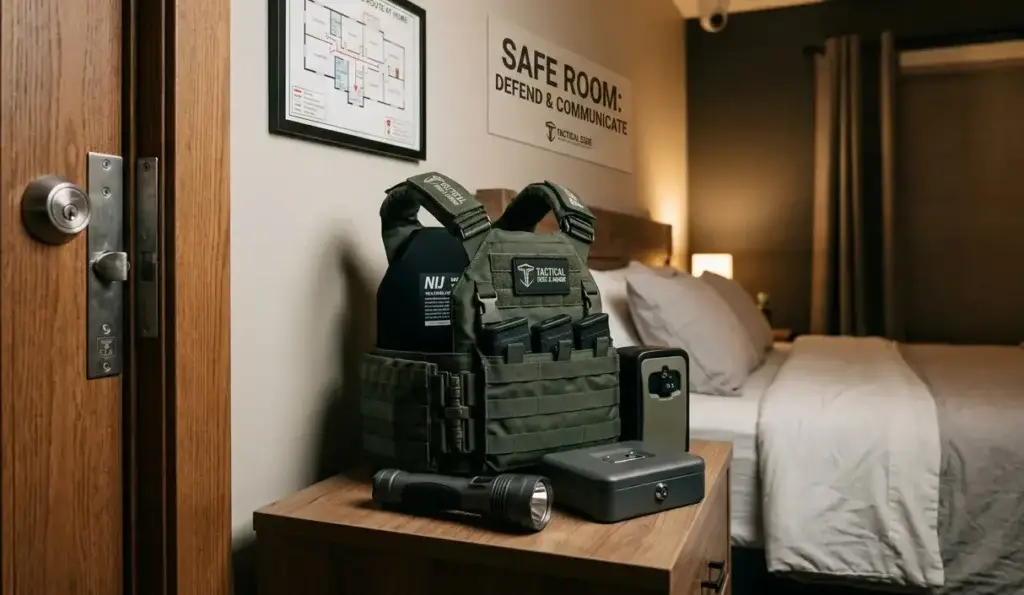
When a crisis hits, you won’t rise to the occasion—you will default to your training. Preparing for a home invasion isn’t about living in fear; it’s about taking control. By layering prevention, planning, and tactical response, you can transform your home from a soft target into an unappealing, high-risk environment for criminals.
You never want to “wing it” in a crisis. Here is your step-by-step blueprint to build layers of protection and a clear safety plan that everyone in your household will understand.
1. How to Harden Your Home Against Intruders
Most criminals look for the easiest target, not the richest. Your primary goal is to make your home look like far too much trouble to break into. Implementing simple home security upgrades will drastically lower your risk.
Reinforcing Exterior Doors & Hardware
- Upgrade to solid cores: Use solid core wood or metal exterior doors. Hollow interior-style doors offer virtually no resistance to forced entry.
- Anchor your hardware: Install high-quality deadbolts using heavy-duty 3-inch screws. Driving these deep into the wall studs—rather than just the flimsy decorative trim—makes the door frame exponentially harder to kick in.
- Reinforce the weak points: Consider installing door jamb and hinge reinforcement kits to distribute the force of an impact.
- Verify before opening: Add a wide-angle peephole or a video doorbell camera so you never have to open the door to identify a visitor.
Securing Windows & Secondary Access Points
- Keep them locked: It sounds obvious, but make a habit of physically locking all windows, especially on the ground floor and basement levels.
- Apply security film: Consider applying shatter-resistant window security film to your glass. While it may not stop a determined intruder indefinitely, it makes smashing through the glass a slow, noisy, and frustrating process.
- Install entry sensors: Place window and door sensors connected to a reliable home security system to grant you an immediate early warning.
Enhancing Lighting, Visibility, and Alarms
- Eliminate blind spots: Install motion-activated floodlights around all entrances, pathways, and dark corners. Intruders hate being illuminated.
- Maintain your landscaping: Keep shrubs, bushes, and trees trimmed low near doors and windows so they cannot be used as concealment.
- Deploy visible deterrents: Even a basic monitored alarm system drastically increases the risk for an intruder. Visible security cameras and yard signs advertising your security provider act as powerful psychological deterrents.
- Test your equipment: Regularly test your alarm system, check camera battery levels, and ensure every adult in the house knows how to activate the panic buttons or mobile app alerts instantly.
2. Daily Security Habits & Access Control
The strongest locks in the world are useless if they aren’t utilized. Long-term safety relies on consistent, everyday habits.
Establish a Lockdown Routine
- Lock up immediately: Keep your doors and windows locked even when you are actively at home. Many home invasions occur right after an occupant leaves a door unlocked “just for a minute” or opens it carelessly for a stranger.
- Use secondary barriers: Use door chains or security latches that allow you to crack the door slightly to speak or receive mail without giving full physical access.
Practice Dynamic Vigilance at the Front Door
- Never open blindly: Do not open the door automatically just because someone rings the bell or “looks official.” Always verify their identity through your peephole or camera first.
- Verify credentials: If a visitor claims to be a utility worker, delivery driver, or repair technician, ask to see their ID. If you have any doubts, keep the door locked, find the company’s official phone number online, and call to verify their dispatch. Do not trust numbers printed on a badge they hand you.
Keep Valuables and Routines Discreet
- Mind your windows: Adjust your blinds or curtains so that expensive electronics, safes, or artwork aren’t visible to passersby from the street.
- Limit social media updates: Avoid posting travel schedules, countdowns, or vacation photos publicly while you are away. An empty house is a prime target for a burglary, which can quickly turn into a dangerous home invasion if a family member returns unexpectedly.
3. Creating a Household Emergency Safety Plan
In a high-stress scenario, your family will look for direction. Having a practiced strategy prevents panic and ensures everyone moves with purpose.
Designate and Equipping a Safe Room
Choose a centralized room that locks from the inside—most commonly the primary bedroom. Ideally, this room should feature:
- A solid core door fitted with a heavy-duty deadbolt.
- An emergency cell phone (even an unactivated cell phone can dial 911) or a dedicated landline.
- High-output flashlights and a fully stocked first-aid kit.
- Any chosen self-defense tools (stored securely but accessibly).
Map Out Escape Routes and Rally Points
- Identify two ways out: Ensure every bedroom has at least two viable escape routes (such as a door and a window).
- Establish a designated meeting spot: Pick a specific rally point outside the home—like a trusted neighbor’s porch or a specific tree down the street—where everyone gathers if they have to evacuate.
- Instruct children clearly: Teach kids a definitive rule: “If you have to run outside, go straight to [Rally Point] and never go back inside for any reason.”
Implement Simple Verbal Commands
Agree on short, unambiguous phrases that your family can recognize instantly:
- “Safe Room!” means drop everything, run directly to the designated safe room, and lock the door.
- “Out, Out, Out!” means immediately evacuate the house through the nearest exit and head straight to the outdoor rally point.
💡 Pro Tip: Practice these scenarios calmly with your children a few times a year, treating them exactly like a standard school fire drill so they become muscle memory rather than sources of fear.
4. Crisis Response: What to Do During an Invasion
If the unthinkable happens and someone violently breaches your perimeter, a calm, rehearsed sequence of actions will keep you focused.
Step 1: Recognize and Alert
The moment you hear an unmistakable sound of forced entry (like breaking glass or a door being rammed), shout your family command at the top of your lungs: “Safe room!” or “Everyone to the bedroom NOW!” Simultaneously, trigger your security system’s panic button or silent alarm to get emergency services moving to your location.
Step 2: Call 911 Immediately
Once you reach the safe room—or while you are actively moving toward it—dial 911. State your information in order of priority:
- Your exact address first (in case the call drops unexpectedly).
- What is happening (e.g., “An active home invasion, intruders are inside the house”).
- Where you are hiding (e.g., “My family and I are barricaded in the master bedroom”).
- Descriptions of suspects (number of intruders, clothing, weapons, or direction of entry, if observed safely).
Step 3: Barricade and Stay Put
Lock the safe room door and reinforce it by dragging heavy furniture (like a dresser or desk) against it. Turn off the lights, remain absolutely silent, and take up a position low to the ground behind solid cover—such as a heavy bed frame or a solid wood chest—rather than just standing behind drywall. Stay on the line with the 911 dispatcher until uniformed officers have cleared your house, and follow their instructions carefully.
Step 4: Avoid Confrontation If Possible
If an escape route is completely clear and your entire family can exit the home safely, do so. Fleeing the property is almost always safer than a physical confrontation. Remember: your priority is protecting human life, not your physical belongings.
5. Defensive Tools, Training, and Protective Gear
If you choose to incorporate tactical equipment into your safety strategy, remember that gear is merely a force multiplier—it is only as effective as the person using it.
Selecting Self-Defense Tools
If you choose to own a firearm or a less-lethal defense tool (like pepper gel), you must commit to three non-negotiables:
- Professional Training: Regular, hands-on instruction under stress.
- Safe Storage: Utilizing quick-access biometric or electronic safes to keep tools out of the hands of children while keeping them available in an emergency.
- Legal Awareness: Fully understanding your local laws regarding self-defense, castle doctrine, and the use of force.
Utilizing Body Armor for Home Defense
Modern, reliable body armor can dramatically increase your survivability if a home defense situation escalates into violence. If you integrate armor into your plan:
- Choose rated protection: Opt for body armor with proper National Institute of Justice (NIJ) ratings, such as ballistic plates designed to stop relevant threats.
- Ensure rapid deployment: Practice putting the carrier on quickly in the dark and under stress.
- Stage it correctly: Store your protective gear in an accessible, consistent location near where you plan to stage during an emergency (like right next to your safe room bedside).
Prioritizing Training Over Gear
Hardware can never replace software. Look for reputable home-defense courses that specifically cover:
- Advanced situational awareness and de-escalation.
- Navigating cover and concealment within a residential layout.
- Post-incident communication with family members and responding law enforcement officers.
6. Special Considerations for Vulnerable Family Members
A universal plan doesn’t work if it leaves someone behind. Tailor your strategy to accommodate everyone under your roof.
Children
Keep their instructions ultra-simple and actionable. Do not explain the graphic details of crime; instead, frame it as a strict drill: “When you hear the code word, run to Mommy’s room, get under the bed, and stay quiet as a mouse.”
Elderly or Disabled Residents
If a family member has mobility challenges, a safe room across the house won’t work. Designate a safe room immediately adjacent to their primary living space. Focus heavily on hardening their specific doors, adding wireless panic buttons they can wear or keep on a nightstand, and modifying doorways to ensure clear, unobstructed escape paths.
7. Aftermath Planning: Legal and Emotional Recovery
The crisis doesn’t completely end when the sirens arrive. Preparing for the aftermath is an essential piece of true readiness.
Legal Preparedness
Familiarize yourself with your jurisdiction’s legal framework regarding self-defense, “duty to retreat,” or “castle doctrine.” In the wake of any self-defense incident, secure the scene, cooperate with arriving officers by stating you were the victim of a crime, and contact a qualified defense attorney as soon as possible to guide you through formal statements.
Emotional Recovery
A home invasion is a profoundly traumatic event that violates your sense of safety. It is entirely normal for family members to experience acute stress reactions afterward, including insomnia, hypervigilance, flash flashbacks, or severe anxiety. Seeking professional trauma counseling is a healthy, proactive step to help your household process the event and rebuild emotional security.
Home Security Checklist: Immediate & Long-Term Steps
Use this condensed checklist to turn this guide into an actionable security plan.
This Week: Immediate Upgrades
- [ ] Replace the short screws in all exterior door strike plates and hinges with 3-inch screws.
- [ ] Inspect every window and door lock to ensure they function flawlessly.
- [ ] Conduct a security audit: Walk around the exterior of your property from a criminal’s perspective to locate and fix easy points of entry.
- [ ] Designate a secure safe room and equip it with a dedicated flashlight and phone charger.
- [ ] Talk through the basic verbal commands and safety plan with everyone in your home.
This Month: Expanding Your Security
- [ ] Install motion-activated exterior lighting and high-visibility cameras around your perimeter.
- [ ] Run a calm, unannounced “safe room drill” with your family to identify friction points.
- [ ] Research reputable home defense training courses and quality tactical gear suppliers in your region.
- [ ] Review your local self-defense laws online or with a legal professional.
Ongoing Maintenance
- [ ] Maintain the habit of locking doors and windows automatically, even when inside.
- [ ] Refresh your household drills every six months so they remain second nature.
- [ ] Service your gear regularly by charging flashlights, testing alarm batteries, and verifying camera feeds.
Don’t wait for a wake-up call to secure your perimeter. Start with the immediate checklist steps today, and ensure your safe room is fully equipped to protect what matters most.