
Back Face Deformation Explained: Why Stopping the Bullet Isn’t Enough
When it comes to body armor and ballistic protection, stopping a bullet is only part of the equation. A critical factor that often goes overlooked is back face deformation (BFD), the indentation or deformation caused by a bullet’s impact on the back side of the armor. Understanding BFD is essential for anyone involved in selecting, designing, or wearing body armor, as it directly impacts user safety and survivability. In this blog, we’ll break down what back face deformation is, why it matters, and how advancements in ballistic technology are addressing it.
What is Back Face Deformation?
![Fig. 9. Impact energy absorbing mechanism of (a) a three-layer AF target and (b) a CL target at an impact velocity of 274.5 m/s [88].](https://tacticaledgeandarmor.com/wp-content/uploads/2025/06/1-s2.0-S1359836822002694-gr9-1.jpg)
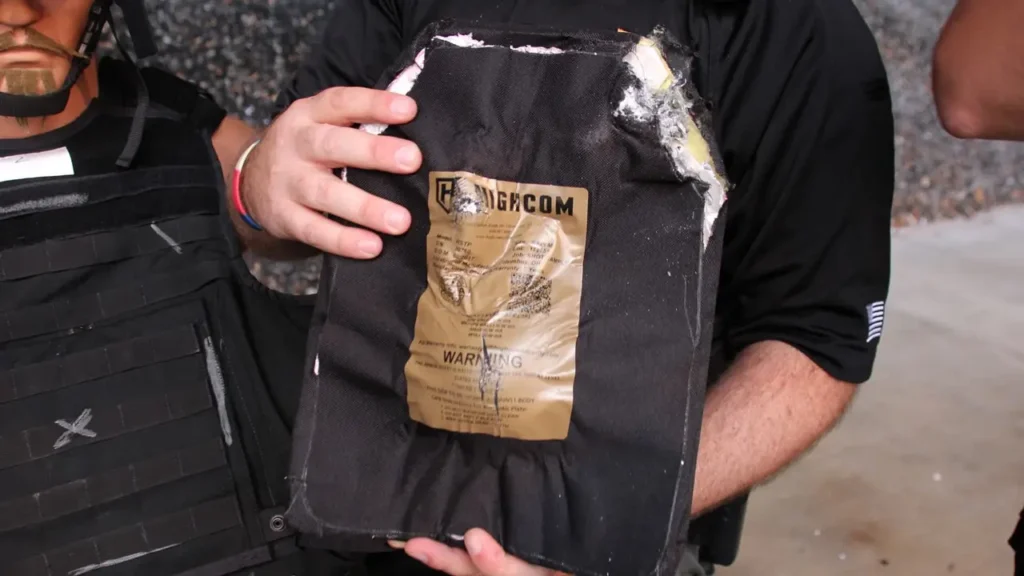
Back face deformation refers to the bulge or indentation that forms on the inner side of body armor when a bullet strikes it. Even if the armor stops the bullet from penetrating, the energy from the impact transfers through the material, causing it to deform inward toward the wearer’s body. This deformation can result in blunt force trauma, which may cause serious injuries like bruising, fractured ribs, or even internal organ damage.
The extent of BFD depends on several factors:
- Bullet type and velocity: Higher-caliber or faster projectiles transfer more energy.
- Armor material: Soft armor (like Kevlar) typically deforms more than hard armor (like ceramic plates).
- Armor design: Multi-layered or composite systems can reduce BFD.
- Testing standards: Different standards, like those set by the National Institute of Justice (NIJ), specify acceptable BFD limits.
For example, the NIJ Standard-0101.06 for ballistic resistance allows a maximum BFD of 44mm for body armor to be certified, as this is considered the threshold for minimizing serious injury.
Why Back Face Deformation Matters
![Fig. 15. (a) A 102 mm thick target impacted by a 20 mm fragment simulating projectile (FSP) below the ballistic limit. Post-impacted target from the experiment at 1966 m/s (Left), target from the numerical simulation 1 ms after impact at 2200 m/s (middle), and cross-section of simulated target (right). (b) Numerical (left) and experimental (right) target response at 450 μs after impacted by a 20 mm FSP at 888 m/s [130].](https://tacticaledgeandarmor.com/wp-content/uploads/2025/06/1-s2.0-S1359836822002694-gr15.webp)
Stopping a bullet is the primary goal of body armor, but if the BFD is too severe, the wearer could still face life-threatening injuries. Blunt force trauma from excessive deformation can lead to:
- Soft tissue injuries: Bruising or lacerations.
- Skeletal damage: Fractured ribs or sternum.
- Internal injuries: Damage to organs like the lungs or heart.
For law enforcement, military personnel, or civilians relying on body armor, minimizing BFD is critical to ensuring not just survival but also the ability to remain operational after a hit. A soldier or officer incapacitated by blunt trauma may be unable to respond effectively in a high-threat situation.
How is Back Face Deformation Measured?
BFD is typically measured during ballistic testing using a clay backing material, often Roma Plastilina No. 1, which simulates human tissue. When a bullet strikes the armor, the depth of the indentation in the clay is measured to determine the BFD. This testing ensures that armor meets safety standards like those from the NIJ or other international bodies.

Key metrics include:
- Depth of deformation: Measured in millimeters, with lower values indicating better performance.
- Consistency: Armor must perform reliably across multiple impacts.
- Environmental factors: Testing may account for heat, moisture, or wear that could affect armor performance.
Innovations Reducing Back Face Deformation
The ballistic protection industry is continually evolving to address BFD through advanced materials and design. Some key innovations include:
- Hybrid armor systems: Combining soft and hard armor layers to dissipate energy more effectively.
- Advanced fibers: Materials like ultra-high-molecular-weight polyethylene (UHMWPE) offer high strength with reduced weight and deformation.
- Energy-absorbing backers: Trauma pads or specialized backing materials help spread impact energy, reducing BFD.
- Ceramic and composite plates: Hard armor with improved energy dissipation minimizes deformation compared to soft armor alone.
For example, modern Level IV ceramic plates paired with trauma pads can reduce BFD significantly, offering protection against high-powered rifle rounds while keeping deformation within safe limits.
Choosing Body Armor with BFD in Mind
When selecting body armor, consider the following to ensure optimal protection against BFD:
- Understand the threat level: Match the armor’s NIJ rating (e.g., Level IIIA, III, or IV) to the expected ballistic threats.
- Check BFD specifications: Look for armor tested to meet or exceed NIJ standards for BFD.
- Prioritize comfort and mobility: Lightweight materials like UHMWPE reduce fatigue while maintaining low BFD.
- Consider add-ons: Trauma pads or additional backing layers can further mitigate blunt force trauma.
Always consult with manufacturers or ballistic experts to verify that the armor meets your specific needs, whether for tactical operations, law enforcement, or personal defense.
The Future of Ballistic Protection
As threats evolve, so does the technology behind body armor. Researchers are exploring nanotechnology, graphene-based materials, and smart textiles to create lighter, stronger armor with minimal BFD. These advancements aim to provide maximum protection without compromising mobility or comfort, ensuring that wearers can survive and thrive in high-risk scenarios.
Conclusion
Back face deformation is a critical factor in the effectiveness of body armor. While stopping a bullet is the first step, minimizing the impact’s energy transfer is equally important to prevent blunt force trauma. By understanding BFD and choosing armor designed to reduce it, users can enhance their safety and operational capability. Stay informed about the latest advancements in ballistic protection to make the best choices for your needs.