
Armor Lingo 101: Speak the Language of Ballistic Protection
A Glossary of Common Civilian Body Armor Terms
Body armor is a critical tool for personal protection, widely used by civilians, law enforcement, and security professionals. Understanding the terminology associated with body armor is essential for making informed decisions about purchasing and using protective gear.
Below is a glossary of key terms in the civilian body armor industry, designed to clarify technical jargon and provide insight into this specialized field. We have also included some visual examples and links to our products for easy ordering or further education!
Armor Plate

A rigid panel, typically made from materials like ceramic, steel, or ultra-high-molecular-weight polyethylene (UHMWPE), designed to stop ballistic threats. Armor plates are inserted into plate carriers or vests to provide protection against high-velocity projectiles, such as rifle rounds. They are rated according to standards like the National Institute of Justice (NIJ) for their ability to defeat specific threats.
Ballistic Resistance
The ability of body armor to withstand penetration or deformation from projectiles, such as bullets or shrapnel. Ballistic resistance is determined by the materials used and the armor’s construction, with performance levels defined by standards like NIJ 0101.06, which categorize armor based on the types of ammunition it can stop.
Body Armor

Protective gear worn on the torso to shield against ballistic, stab, or blunt force threats. Civilian body armor includes soft armor vests, plate carriers, and concealable options designed for personal defense, often used by private security, journalists, or individuals in high-risk environments.
Carrier
A wearable garment, typically a vest, designed to hold armor plates or soft armor panels. Carriers come in various styles, including tactical (with MOLLE webbing for attaching gear) and concealable (designed to be worn discreetly under clothing). The carrier itself is not ballistic-resistant but serves as the platform for protective materials.
Ceramic Plate

A type of armor plate made from ceramic materials, such as boron carbide or silicon carbide, often backed with a composite material like UHMWPE. Ceramic plates are lightweight and effective against high-velocity rifle rounds, commonly used in Level IV body armor to defeat armor-piercing threats.
Concealable Armor
Body armor designed to be worn discreetly under clothing, typically consisting of soft armor panels made from materials like Kevlar or Dyneema. Concealable armor is popular among civilians and professionals who need protection without drawing attention, offering Level II or IIIA protection for handgun threats.
NIJ (National Institute of Justice)

The U.S. organization responsible for establishing standards for body armor performance, outlined in NIJ Standard 0101.06. The NIJ certifies body armor based on its ability to stop specific ballistic threats, categorizing it into levels (e.g., II, IIIA, III, IV).
Level II
An NIJ protection rating for body armor capable of stopping common handgun rounds, such as 9mm and .357 Magnum, at specified velocities. Level II armor is typically soft, lightweight, and concealable, suitable for low-to-moderate threat environments.
Level III
An NIJ protection rating for body armor, typically hard plates, designed to stop rifle rounds like 7.62x51mm NATO (.308 Winchester) at specified velocities. Level III armor is often used in tactical scenarios and requires a plate carrier for deployment.
Level IIIA

An NIJ protection rating for soft body armor capable of stopping higher-velocity handgun rounds, such as .44 Magnum and 9mm submachine gun rounds. Level IIIA is commonly used in concealable vests for civilian and law enforcement applications.
Level IV
The highest NIJ protection rating for body armor, designed to stop armor-piercing rifle rounds, such as .30-06 M2 AP. Level IV armor typically uses ceramic plates and is heavier, intended for high-threat environments where maximum protection is needed.
RF or Rifle Fragmentation (NIJ)
It’s used in NIJ 0101.07 and newer body armor standards (replacing older Level III/IV terms). RF ratings tell you what kind of rifle threats a body armor plate can stop.
RF1 (similar to old Level III)
Stops common rifle rounds like:
- 7.62x39mm (AK-47)
- 5.56mm M193 (basic AR-15 ammo)
RF2 (new level, tougher than RF1)
Stops:
- M855 Green Tip 5.56mm (armor-piercing light)
- AK rounds + some faster or harder bullets
Ideal for more advanced threats, especially if you expect to face light armor-piercing rounds.
RF3 (like old Level IV)
Stops:
- .30-06 M2 AP (full armor-piercing rifle round)
Used by military, law enforcement, or preppers expecting serious threats.
| NIJ RF Level | What it Stops | Equivalent to Older NIJ | Notes |
|---|---|---|---|
| RF1 | Basic rifle rounds (AK, AR) | Level III | Lightweight, affordable |
| RF2 | Green Tips, AK, M193 | NEW level | Mid-range protection |
| RF3 | .30-06 AP | Level IV | Heavy-duty, high-threat armor |
HG (NIJ)
HG stands for HandGun. It’s part of the newer NIJ 0101.07 standard (which is replacing the old Level IIA, II, and IIIA ratings). HG levels tell you what kinds of handgun threats a soft body armor vest can stop — think pistols and revolvers, not rifles.
| NIJ HG Level | What it Stops | Equivalent to Older NIJ | Notes |
|---|---|---|---|
| HG1 | 9mm, .40, .357 | Level II | Lighter, more flexible |
| HG2 | .44 Mag, .357 SIG | Level IIIA | Thicker, more protection |
MOLLE (Modular Lightweight Load-carrying Equipment)

A webbing system on tactical vests and plate carriers that allows users to attach pouches, holsters, or other gear. MOLLE is widely used in military and civilian tactical body armor for customization and load-bearing functionality.
Soft Armor

Flexible body armor made from woven or laminated fibers, such as Kevlar, Spectra, or Dyneema. Soft armor is typically used in concealable vests and provides protection against handgun rounds (Levels II and IIIA). It is lighter and more comfortable for extended wear but less effective against rifle rounds.
Spall
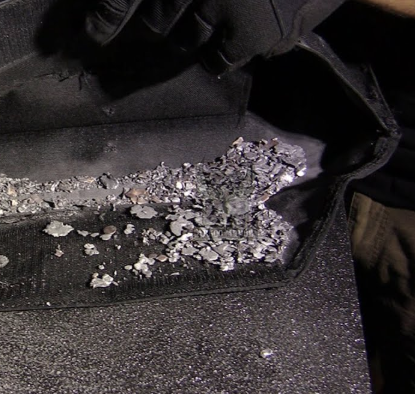
Fragments or debris are produced when a projectile strikes a hard armor plate, particularly steel. Spall can pose a secondary injury risk if not mitigated by anti-spall coatings or layers, which are designed to capture or redirect these fragments.
Stab Resistance
The ability of body armor to protect against edged or pointed weapons, such as knives or spikes. Stab-resistant armor often uses specialized materials or weaves and is rated separately from ballistic protection, with standards like NIJ 0115.00 for stab resistance levels.
Trauma Pad- In Relation To Body Armor
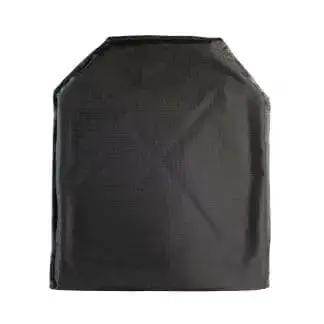
A soft, padded layer worn behind body armor to reduce backface deformation (BFD), the impact energy transferred through the armor to the wearer’s body. Trauma pads enhance comfort and reduce the risk of blunt force injury.
UHMWPE (Ultra-High-Molecular-Weight Polyethylene)
A lightweight, high-strength material used in both soft and hard body armor. UHMWPE is known for its excellent ballistic resistance and is often used in Level III and IV plates, as well as some advanced soft armor designs.
Vest-In Relation To Body Armor

A general term for a body armor garment, which may include soft armor panels, plate carriers, or a combination of both. Vests vary in design based on their intended use, from concealable models for civilians to tactical vests for law enforcement or military applications.
In The End
Understanding these terms empowers civilians, security professionals, and enthusiasts to make informed choices about body armor. Whether selecting a concealable vest for daily wear or a tactical plate carrier for high-threat scenarios, knowing the capabilities and limitations of armor is crucial. Always ensure that body armor is NIJ-certified and suits your specific needs, and consult with manufacturers or experts for guidance on fit, maintenance, and compliance with local laws.
For further reading or to explore certified body armor options, visit reputable manufacturers like us, or refer to the NIJ’s official resources at www.nij.gov.
3 Responses