
Federal & State Body Armor Laws — 2025 Edition
Last updated 27 April 2025
Table of Contents
- 1. Federal Regulations
- 2. State-by-State Guide
- 3. Common Misconceptions
- 4. Frequently Asked Questions
- 5. Conclusion
1. Federal Regulations (18 U.S.C. § 931)
- Who may own body armor? Any U.S. resident not convicted of a violent felony may purchase, possess, and wear body armor.
- Violent-felon prohibition: Convicted violent felons face up to 10 years’ imprisonment for possession, unless they have employer certification and written approval from the chief law‑enforcement officer.
- Export & shipping: Exporting body armor outside the United States requires State Department authorization under ITAR/EAR rules.
- Crime enhancement: Wearing body armor while committing a federal violent crime adds an independent felony charge.
2. State-by-State Guide
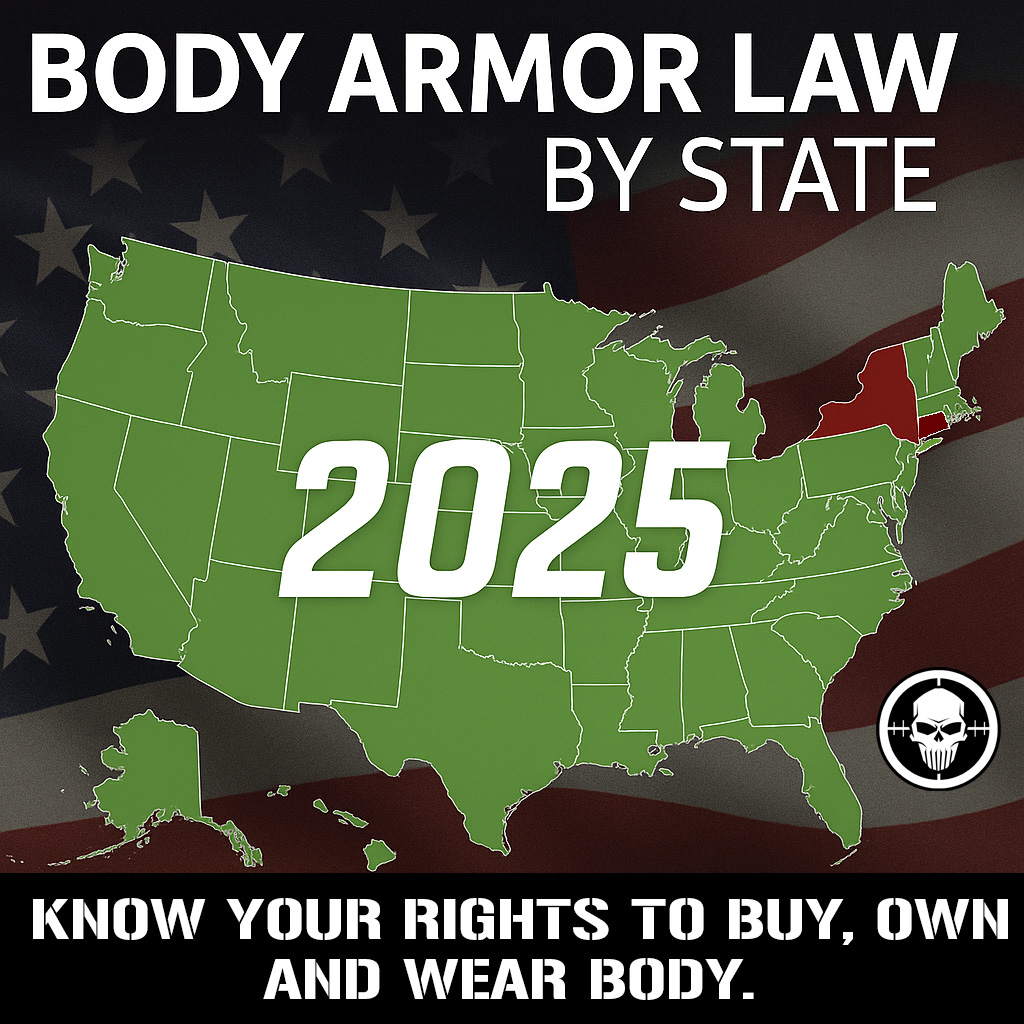
The table below summarizes civilian ownership rules and major restrictions for each state.
| State | Civilian Ownership | Key Restrictions |
| Alabama | Legal for non-felons | No extra rules beyond federal law. |
| Alaska | Legal for non-felons | — |
| Arizona | Legal for non-felons | Illegal to wear during a crime. |
| Arkansas | Legal for non-felons (except certain violent felons) | Class A misdemeanor for specified violent felons to possess. |
| California | Legal for non-felons | Violent-felony convicts banned; AB 92, 2024. |
| Colorado | Legal for non-felons | — |
| Connecticut | Legal for non-felons | Face‑to‑face sales only; online shipments banned. |
| Delaware | Legal for non-felons | Illegal to wear during a crime. |
| Florida | Legal for non-felons | Wearing during crime is a felony enhancer. |
| Georgia | Legal for non-felons | Illegal to wear during violent crime or drug‑trafficking. |
| Hawaii | Legal for non-felons | — |
| Idaho | Legal for non-felons | — |
| Illinois | Legal for non-felons | HB 3238 (civilian ban) stalled as of Apr 2025. |
| Indiana | Legal for non-felons | Wearing during felony = Level 6 felony. |
| Iowa | Legal for non-felons | — |
| Kansas | Legal for non-felons | Topeka bans vests at public demonstrations. |
| Kentucky | Legal for non-felons | — |
| Louisiana | Legal for non-felons | Illegal on school property; wearing during crime = felony. |
| Maine | Legal for non-felons | — |
| Maryland | Permit required for violent‑crime or drug‑trafficking felons. | — |
| Massachusetts | Legal for non-felons | Wearing during crime = separate felony. |
| Michigan | Legal for non-felons | Wearing during violent crime = ≤4 yrs &/or $2 000 fine. |
| Minnesota | Legal for non-felons | — |
| Mississippi | Legal for non-felons | — |
| Missouri | Legal for non-felons | — |
| Montana | Legal for non-felons | — |
| Nebraska | Legal for non-felons | — |
| Nevada | Legal for non-felons | — |
| New Hampshire | Legal for non-felons | Wearing during felony = Class B felony. |
| New Jersey | Legal for non-felons | Extra penalties for wearing during crime. |
| New Mexico | Legal for non-felons | — |
| New York | Sales limited to eligible professions | Unlawful purchase = Class A misdemeanor. |
| North Carolina | Legal for non-felons | Wearing during crime = felony enhancer. |
| North Dakota | Legal for non-felons | — |
| Ohio | Legal for non-felons | — |
| Oklahoma | Legal for non-felons | Wearing during crime = felony. |
| Oregon | Legal for non-felons | — |
| Pennsylvania | Legal for non-felons | — |
| Rhode Island | Legal for non-felons | Violent‑felon possession banned. |
| South Carolina | Legal for non-felons | Wearing during crime = felony enhancer. |
| South Dakota | Legal for non-felons | — |
| Tennessee | Legal for non-felons | Wearing during crime = Class E felony. |
| Texas | Legal for non-felons | — |
| Utah | Legal for non-felons | — |
| Vermont | Legal for non-felons | — |
| Virginia | Legal for non-felons | Wearing body armor + firearm/knife during violent felony = Class 4 felony. |
| Washington | Legal for non-felons | — |
| West Virginia | Legal for non-felons | Wearing during force‑based felony = extra felony. |
| Wisconsin | Legal for non-felons | Wearing during felony adds years to sentence. |
| Wyoming | Legal for non-felons | — |
Recent Legislative Watch (2024 – 2025)
- California: AB 92 entered force 1 Jan 2024, codifying a felony ban for violent‑felony convicts. Additional 2025 proposal seeks profession‑based sales model.
- Illinois: HB 3238 (full civilian ban) remains in committee; not enacted by Apr 2025.
- New York: Senate Bill S1450 (2025) would clarify eligible‑profession list and tighten online‑verification rules.
3. Common Misconceptions
- “Body armor is illegal for civilians.” — False; 44 states allow non‑felon civilian ownership.
- “Federal law is all that matters.” — False; state statutes add layer‑specific rules.
- “Vests make you invincible.” — False; armor reduces risk but never eliminates it.
4. Frequently Asked Questions (2025)
Is it legal to wear body armor while committing a crime?
Possessing or wearing armor while committing or attempting a violent crime is a separate felony in most jurisdictions—even if the underlying offense fails.
Can I buy body armor online?
Yes, except in Connecticut (face‑to‑face only) and New York (sales limited to eligible professions with verification).
Do I need a permit?
Generally no, except Maryland’s permit system for certain felons and local restrictions such as Topeka’s public‑demonstration ban.
Are plates, carriers, and helmets treated the same?
Most statutes cover “body armor” broadly, but some proposed bills (e.g., IL HB 3238) single out armor plates and helmets.
5. Conclusion
Understanding body‑armor statutes is vital for responsible ownership. Federal law sets a baseline, but individual states overlay unique rules—from purchase channels to penalties for misuse. Stay updated (laws change fast), verify eligibility before checkout, and consult local authorities whenever in doubt.
9 Responses